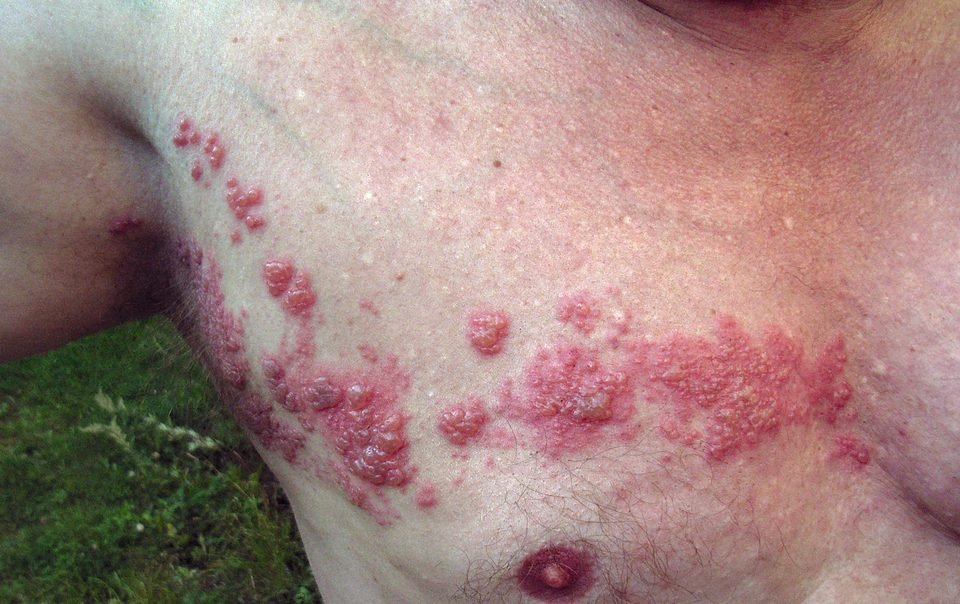
A band of burning, stabbing pain on one side of the body, followed by a strip of red blisters that stops at the midline — that’s the classic picture of shingles. Antiviral tablets work best when started within 72 hours of the rash appearing, cutting the severity and the risk of long-lasting nerve pain. That deadline is exactly why a same-day video review with a registered Irish doctor (€34.99) is worth booking now, not next week.
Book a shingles consultation — pick a time below
The consultation is preselected. Choose a slot, add your details, and a registered Irish doctor will call you.
Employer sick notes issued for up to 7 days. No physical examination or wet signature required. Appointments typically within 30 minutes. At busy times, your doctor may call up to 20 minutes after your booked time.
Your consultation will be with one of our IMC-registered doctors
📱 In the DoxOnCall app this consultation is €34.99€27.99 — code DOXAPP20 on your first app booking. Get the free app ›
📞 The doctor calls you — no waiting room
✅ IMC-registered Irish doctors
🕑 All times are Irish time
Pick a date to see available times
Your Details
All fields marked * are required
You're booking
Your information is encrypted and protected under GDPR
Secure payment next — you won't be charged until you confirm. Having trouble making payment or securing your slot? 💬 WhatsApp our support team
Booking for yourself? You've given the patient your own name and date of birth.You've given the patient your own name, with no date of birth for them.
Review & Pay
Confirm your booking details below
One certificate per consultation
A sick note and a fit-to-work certificate certify opposite things — that you are unfit for work, and that you are fit to return. Each needs its own clinical assessment, so they cannot both be issued from the same consultation. If you need both, please book two separate appointments. Booking this consultation intending to obtain both does not entitle you to a refund.
Pain first — burning, tingling or stabbing in one area, often 1–3 days before anything appears on the skin.
One-sided rash — a band or patch of red spots turning to fluid-filled blisters, most often on the chest, back or abdomen, never crossing the midline.
Blisters cloud, burst and crust over 7–10 days; the rash usually clears within 2–4 weeks.
You can feel generally off — headache, fatigue, mild fever.
Shingles is the chickenpox virus reactivating from where it lay dormant in a nerve — anyone who has had chickenpox can get it, and it becomes more common (and harsher) from the 50s onward, or when the immune system is run down.
Treat these as urgent, in-person situations: shingles involving the eye, forehead or tip of the nose (risk to sight — needs same-day assessment and often eye-specialist review); blisters in or around the ear with facial weakness, dizziness or hearing change; a widespread rash on both sides of the body; shingles when immunosuppressed or pregnant; or being severely unwell. Call 999/112 if seriously ill.
A one-sided band of blisters that stops at the midline — the pattern that says shingles rather than a simple rash. Photo: Fisle, Wikimedia Commons, CC BY-SA 3.0.
Treatment
Antiviral tablets (aciclovir or valaciclovir, typically 7 days) — most effective started within 72 hours of the rash, and particularly recommended over 50, with moderate-to-severe rash or pain, or with any complication risk. Beyond 72 hours they can still be worthwhile while new blisters are appearing.
Proper pain relief — shingles pain is nerve pain; paracetamol may not be enough, and the doctor can prescribe targeted options where needed.
Skin care — keep the rash clean and dry, loose clothing, a cool compress; cover weeping blisters lightly.
Am I contagious?
You cannot give anyone shingles — but the fluid in the blisters can give chickenpox to someone who has never had it. Until every blister has crusted: keep the rash covered, avoid sharing towels, and stay away from pregnant women who haven’t had chickenpox, newborns, and anyone immunosuppressed. Covered and dry, everyday work and contact is generally fine.
The pain after the rash — don’t tough it out. Nerve pain that lingers after shingles heals (post-herpetic neuralgia) is the most common complication, especially in older adults. Early antiviral treatment reduces the risk, and persistent pain has real treatment options — mention it at review rather than enduring it.
How the online consultation works
Book a time above — same-day appointments are usually available, seven days a week.
Show the rash by video — its one-sided banded pattern is usually diagnostic on camera.
Get treated fast — antivirals and pain relief prescribed electronically to your pharmacy where appropriate, plus clear guidance on contagion and red flags.
Frequently asked questions
What does shingles feel like at the start?
Usually pain before rash: burning, tingling or stabbing in one patch of skin for one to three days, then red spots and blisters appear in that same area on one side of the body only.
Why do the first 72 hours matter?
Antiviral tablets shorten the illness and reduce the risk of lasting nerve pain most effectively when started within 72 hours of the rash appearing — after that the benefit falls, though treatment can still help while new blisters are forming.
Can I give shingles to someone?
Not shingles itself — but blister fluid can cause chickenpox in someone who’s never had it. Keep the rash covered until fully crusted, and avoid non-immune pregnant women, newborns and immunosuppressed people.
Can I work with shingles?
If you feel well enough and the rash can be kept covered and dry, generally yes — unless you work with high-risk groups (maternity, neonatal, immunosuppressed patients), where you should stay off until crusted. A sick note can be arranged during the consultation if needed.
Shingles is near my eye — is that serious?
Potentially, yes. Shingles on the forehead, around the eye or on the tip of the nose can involve the eye itself and threaten sight — it needs same-day in-person assessment, usually with an eye specialist, rather than a remote consultation alone.
Can you get shingles more than once?
Yes, though most people don’t. Repeated episodes, or shingles at a young age, are worth discussing — occasionally they point to a run-down immune system, and vaccination may be worth considering.
This page is general health information, not a diagnosis. A registered Irish doctor will assess your individual situation during your consultation. In an emergency call 999 or 112.
Aoife isn't a doctor. For emergencies call 999 or 112.
WhatsApp us
🍪
We value your privacy
We use cookies to improve your experience on our site. Essential cookies are required for core functionality. Analytics and marketing cookies help us understand how you use our site and measure ad performance. You can choose which cookies to allow. Learn more
Strictly NecessaryRequired for the website to function. Cannot be disabled.
AnalyticsGoogle Analytics — helps us understand how visitors use the site.
One use per patient, on a booking made in the app. iPhone and Android. Not redeemable on the website.
We use cookies. DoxOnCall uses essential cookies to make the booking flow work, plus analytics and advertising-measurement cookies that help us see which ads bring patients so we can keep booking costs low. You can opt out anytime. See our privacy policy for detail.
Essential cookies
Required for the site, booking, and login to work. Cannot be disabled.
Analytics cookies
Anonymised usage analytics (Google Analytics 4) so we can see which pages help patients most. We do not sell or share this data.
Advertising-measurement cookies
Let us measure which online ads (e.g. Google Ads) lead to bookings, so we can keep our prices and booking costs low. No third-party ads are shown to you on this site.