
Insect Bites & Cellulitis Treatment Ireland — Online Doctor
The vast majority of insect bites in Ireland — whether from midges, horseflies (clegs), sandflies or mosquitoes — are nothing to worry about and clear up by themselves within a few days. Now and then, though, a bite or any nick in the skin lets bacteria in, and the resulting infection can push into the deeper skin as cellulitis, which generally calls for antibiotics. On this page we cover how to look after an everyday bite, the signs that one has turned into an infection, what cellulitis looks and feels like, and — crucially — the warning signs that mean you need to be seen quickly. If you suspect a bite has become infected or think you may have cellulitis, a registered Irish doctor can review it by video or phone for €34.99, seven days a week, and prescribe antibiotics where appropriate.
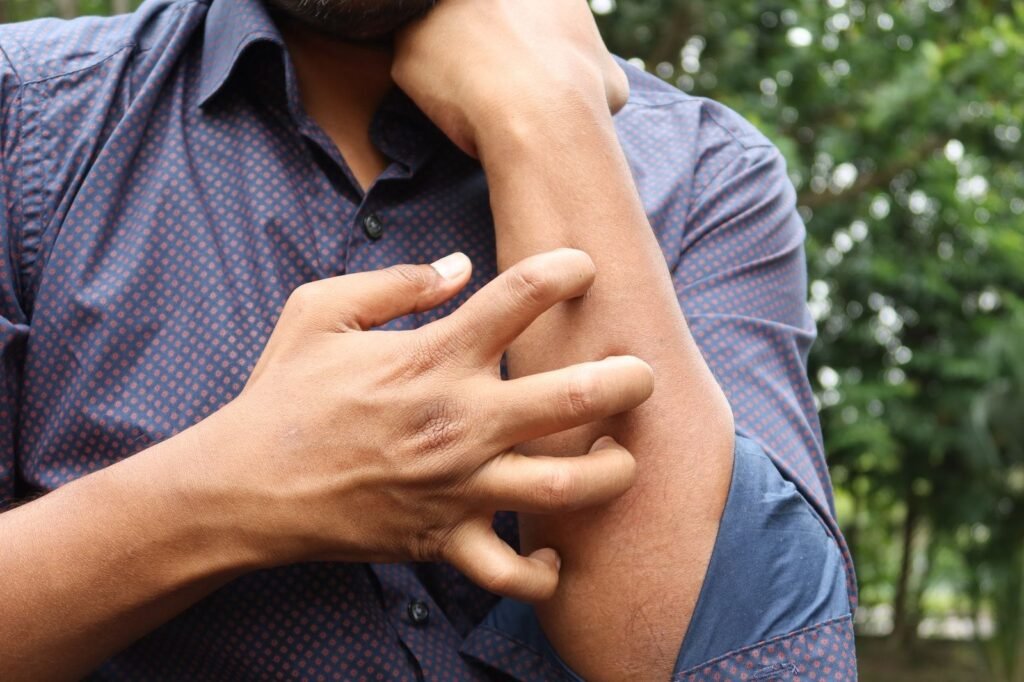
Insect bites in Ireland
The likely offenders here are midges, horseflies (clegs), mosquitoes, fleas and, more rarely, sandflies. A typical bite raises a small red, itchy, swollen lump within minutes to hours. Horsefly bites deserve a mention of their own: because the fly slices the skin open to feed, they can genuinely hurt, take longer to heal, and are somewhat more likely than a midge bite to get infected.
An ordinary reaction may stay itchy and puffy for several days, occasionally longer. Some people react more dramatically, with a wide area of swelling around the bite — usually still just an over-the-top allergic response rather than infection, although the two can look alike in the early stages.
Looking after an everyday bite
- Wash the bite with soap and water.
- Hold a cold compress or wrapped ice pack against it to take down swelling.
- Use an antihistamine for the itch, plus paracetamol or ibuprofen if it is sore.
- Resist scratching — breaking the skin is the main route to an infected bite.
- Leave any blister alone and keep the area clean and covered if it is weeping.
Signs a bite has become infected
Think infection if, over the following day or two, the bite is heading the wrong way and you see:
- Redness spreading outward, with the skin feeling warmer.
- Increasing pain, swelling or firmness.
- Pus, weeping or a yellow crust.
- Feeling off-colour in yourself, or running a temperature.
An infected bite that keeps creeping into the skin around it is frequently how cellulitis starts.
What is cellulitis?
Cellulitis is a bacterial infection of the deeper skin layers, usually from streptococcus or staphylococcus bacteria getting in through a bite, cut, graze or a split in the skin (athlete’s foot or dry, cracked skin, for instance). The lower leg is the most common site, though it can appear anywhere. The affected patch is typically:
- Red, hot, swollen and tender, with an edge that is often hard to define.
- Spreading over a matter of hours, sometimes leaving the skin taut or glossy.
- Coming with feeling unwell, shivery or feverish.
Cellulitis rarely clears by itself — it usually needs a course of oral antibiotics, which a doctor can prescribe after assessing it. Caught early it tends to respond well; ignored, it can spread and turn serious.
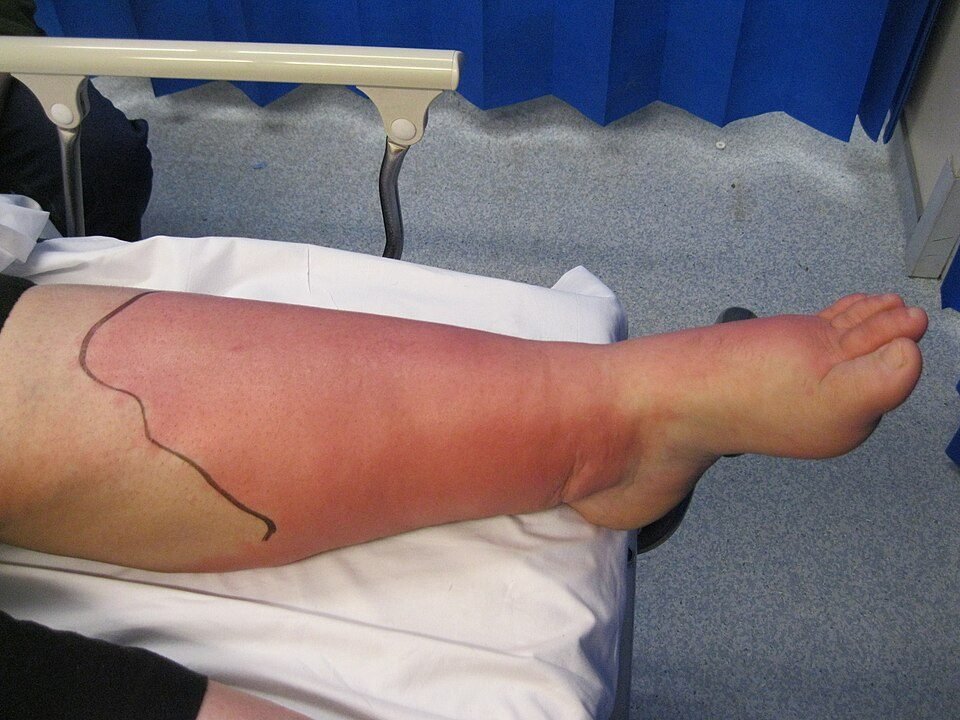
Warning signs — when to get urgent or emergency help
Infected bites and cellulitis can occasionally become dangerous. Head to the Emergency Department now, or ring 112/999, if there is:
- Redness advancing rapidly, or pain far worse than the skin looks would explain (a rare but serious deep infection).
- A high fever, shivering/rigors, a racing pulse, confusion or feeling very unwell — the infection may be reaching the bloodstream (sepsis).
- Cellulitis on the face or around an eye.
- Blistering, darkening or breakdown of the skin over the area.
- Redness that keeps spreading despite antibiotics.
- Swelling of the lips, tongue or throat, or difficulty breathing after a bite or sting — a severe allergic reaction (anaphylaxis).
These need in-person assessment immediately — do not wait for an online appointment.
Preventing bites
- Apply insect repellent to exposed skin, especially near water and around dusk and dawn.
- Cover up with long sleeves and trousers where midges or flies are plentiful.
- Keep existing skin conditions (dry skin, athlete’s foot, eczema) well managed — broken skin is a doorway for infection.
How DoxOnCall can help
If you think a bite has turned infected, or you have a hot, red, spreading patch of skin that might be cellulitis, a registered Irish doctor can assess it by video or phone, advise on care, and — where clinically suitable for a mild to moderate case — prescribe antibiotics sent straight to your chosen pharmacy, with clear guidance on what to look out for. If the infection appears severe, is on the face, or you are very unwell, the doctor will point you to urgent in-person care. A single flat fee of €34.99 covers the consultation, with same-day slots usually available, seven days a week.
Frequently asked questions
How can I tell if my bite is infected?
Suspect infection if, a day or two on, the bite is worsening rather than settling — spreading redness, more warmth, swelling or pain, pus, or feeling unwell or feverish. A normal bite eases over a few days.
Are horsefly bites dangerous?
Usually not — most heal with simple care. But because horseflies cut the skin, their bites are a bit more prone to infection, so keep an eye out for spreading redness, swelling or pus and see a doctor if they appear.
What does cellulitis look like?
A red, hot, swollen, tender area of skin with an ill-defined edge that spreads over hours, most often on the lower leg, frequently with feeling shivery or unwell. It generally needs antibiotics.
Can an online doctor treat cellulitis?
For mild to moderate cellulitis or an infected bite, a registered Irish doctor can assess you and prescribe oral antibiotics where appropriate. Severe cellulitis, facial cellulitis or feeling very unwell needs in-person or emergency care instead.
When is a bite or cellulitis an emergency?
Get emergency care for rapidly spreading redness, pain out of proportion, high fever or shivering, confusion, cellulitis on the face or near an eye, skin blistering or breakdown, or any lip, tongue or throat swelling or breathing difficulty after a bite.
How quickly does cellulitis improve on antibiotics?
With the right antibiotics most people improve within a few days, though the full course usually lasts a week or more. If it is not improving — or is still spreading — after starting antibiotics, seek medical review promptly.
This information is general guidance and does not replace personal medical advice. Always seek care tailored to your own circumstances, and treat the warning signs above as an emergency.
Book your consultation — pick a time below
Your consultation is preselected. Choose a slot, add your details, and a registered Irish doctor will call you.
Select a Service
Consulting with Dr Abdul Rehman
Choose Date & Time
Select a date, then pick an available slot
- 📞 The doctor calls you — no waiting room
- ✅ IMC-registered Irish doctors
- 🕑 All times are Irish time
Your Details
All fields marked * are required
Secure payment next — you won't be charged until you confirm.
Having trouble making payment or securing your slot? 💬 WhatsApp our support team
Booking for yourself?
You've given the patient your own name and date of birth.
You've given the patient your own name, with no date of birth for them.
Review & Pay
Confirm your booking details below
256-bit SSL encryption · Google Pay & card accepted
Refundable if you cancel at least 6 hours before the appointment — see our Terms & Conditions.