
Hidradenitis Suppurativa: The “Boils” That Keep Coming Back — Finally Explained
A painful lump in the armpit. A course of antibiotics. It settles, it scars, and a few weeks later its cousin arrives — same crease, other side. If that loop sounds like your last few years, there’s a strong chance nobody has ever said the words hidradenitis suppurativa (HS) to you. It’s common, it’s chronically under-diagnosed, and it’s treatable. Talk it through privately with a registered Irish doctor — phone or video, no waiting room, €34.99, seven days a week.

Book a confidential HS consultation — pick a time
Your consultation is preselected. Choose a slot below, add your details, and a registered Irish doctor will call you. Photos help but are entirely your call — the story alone tells a doctor most of what they need.
Select a Service
Consulting with Dr Abdul Rehman
Choose Date & Time
Select a date, then pick an available slot
- 📞 The doctor calls you — no waiting room
- ✅ IMC-registered Irish doctors
- 🕑 All times are Irish time
Your Details
All fields marked * are required
Secure payment next — you won't be charged until you confirm.
Having trouble making payment or securing your slot? 💬 WhatsApp our support team
Booking for yourself?
You've given the patient your own name and date of birth.
You've given the patient your own name, with no date of birth for them.
Review & Pay
Confirm your booking details below
256-bit SSL encryption · Google Pay & card accepted
Refundable if you cancel at least 6 hours before the appointment — see our Terms & Conditions.
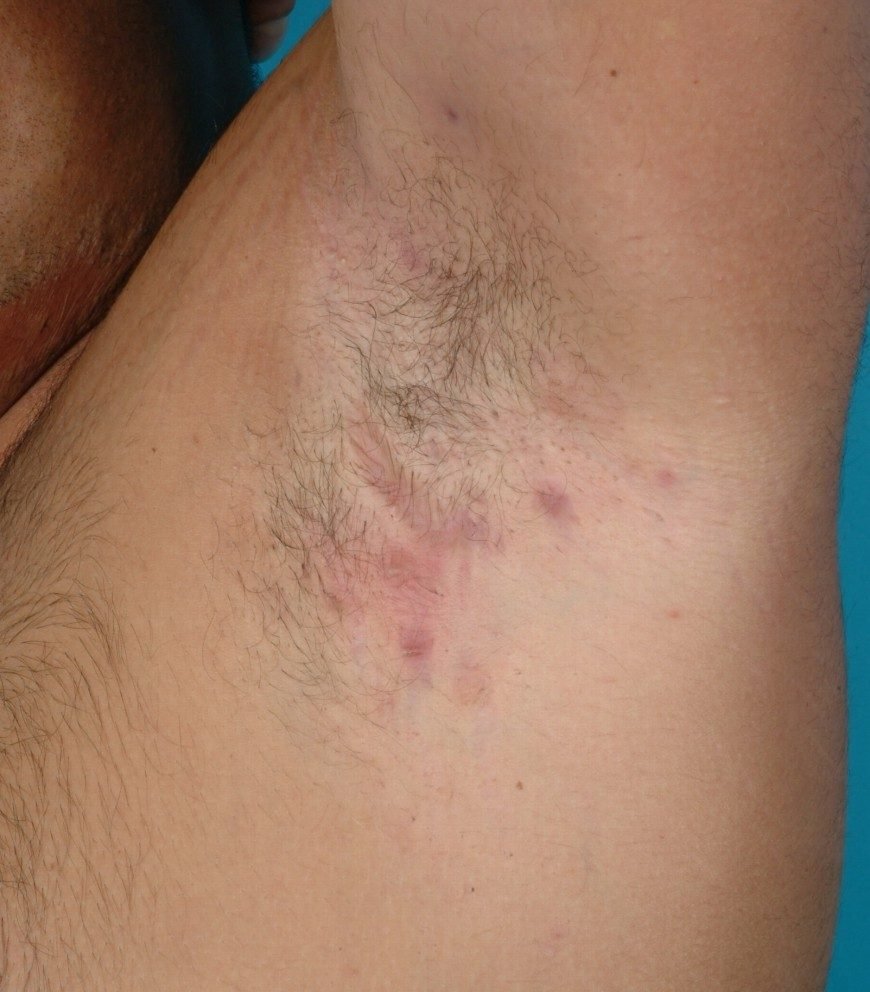
Sound familiar? The pattern doctors look for
- Where: armpits, groin, inner thighs, under the breasts, around the buttocks — creases where skin meets skin.
- What: deep, tender, boil-like lumps — sometimes draining, sometimes just angry — plus, over time, rope-like scars and double-headed blackheads most patients have never had explained.
- The giveaway: recurrence. One boil is bad luck; the same crease flaring for the third time this year is a diagnosis waiting to be made.
- The delay: people typically live with HS for years — being treated one “boil” at a time — before it gets its name. Getting the name is the turning point.
Three myths worth binning today
- “It’s a hygiene thing.” It is not. HS starts inside blocked hair follicles, driven by an over-reactive immune response. No shower routine causes it or cures it — and aggressive scrubbing makes flaring skin worse.
- “Someone could catch it from me.” Nobody can. It is not an infection in the contagious sense — not through touch, towels or intimacy. For a condition that lives in private places, knowing this out loud matters.
- “It’s just boils — you deal with them.” Each lump may pass, but untreated HS tends to escalate slowly: more flares, then tunnels under the skin, then permanent scarring. Early, proper treatment is what interrupts that story — which is exactly why the years-late diagnosis is worth refusing to accept.
What treatment actually looks like
- Name it — history plus a photo is usually enough; no examination couch required.
- Daily antiseptic wash (such as chlorhexidine) as the background habit that lowers flare frequency.
- Milder disease: antibiotic cream (clindamycin) on affected areas.
- Active disease: a three-month tetracycline course — used for its anti-inflammatory effect, which is why it succeeds where the short “boil” courses of the past kept failing.
- Women: hormonal options (certain pills, spironolactone) can meaningfully cut flares.
- Flares: warm compresses, proper pain relief, the right dressings — small things that make a big difference to bad weeks.
- Beyond that: dermatology — biologics such as adalimumab and surgery for established tunnels. The consultation produces the referral letter that gets you in the right queue.
The two changes that shift the odds
Medication is half the story. The two strongest levers in your own hands: smoking — quitting measurably reduces flares over months, and our stop-smoking service can run alongside HS treatment — and weight, where it applies, because less skin-on-skin friction means fewer flares; our weight-loss support exists for exactly this kind of medical reason. Beyond those: loose, breathable clothing, and give the razor a rest over any area mid-flare.
Could it be something else?
- A one-off boil or infected cyst — single lump, single location, no repeat pattern.
- Ingrown hairs and folliculitis — smaller, surface-level, shaving-linked.
- A pilonidal sinus — the recurring lump specifically at the base of the spine.
- Crohn’s-related skin disease — worth raising if recurring deep abscesses around the buttocks come with gut symptoms.
How the online consultation works
- Book a time above — same-day slots are usually available, seven days a week.
- Take the call in private — describe the pattern; share photos only if you’re comfortable.
- Leave with a plan — diagnosis, prescriptions to your pharmacy, flare care, and a referral letter if specialist care is the right next step.
Frequently asked questions
I’ve been getting “boils” for years — could it really be HS all along?
Very possibly, and you’d be in the majority: most people with HS spend years being treated for one-off boils before anyone joins the dots. The tell is the pattern — the same creases, again and again, sometimes leaving scars or paired blackheads behind. If that’s your history, say exactly that in the consultation; the story alone gets a doctor most of the way to the diagnosis.
Is it because of my hygiene? Can my partner catch it?
No, and no — emphatically. HS is an inflammatory condition of blocked hair follicles, driven from inside by an over-keen immune system. It isn’t dirt and it isn’t an infection anyone can catch — not from skin contact, not from towels, not from intimacy. Scrubbing harder actually irritates it. Many patients say hearing this clearly was the most useful part of their first real HS consultation.
What will a doctor actually do on a phone or video call?
Take the history that makes the diagnosis, look at a photo if you’re comfortable sharing one, and start real treatment: an antiseptic wash routine, antibiotic cream for milder disease, or the standard three-month antibiotic course for active HS — plus flare pain management. If your disease is further along, you leave the call with the thing that unlocks specialist care: a referral letter that actually names the condition.
Do the long antibiotic courses mean the boils are infected?
Not in the usual sense. In HS, tetracycline-family antibiotics are used for months at a time mainly for their anti-inflammatory effect — calming the immune overreaction rather than killing an invader. That’s why the five-day antibiotic bursts you may have had for individual “boils” never changed the overall pattern: right tool, wrong timescale.
When is it time for a dermatologist or biologics?
When flares keep coming despite a properly completed three-month course, or when there’s established tunnelling and scarring. Biologic injections such as adalimumab have genuinely changed severe HS, and surgery can deal with permanent tunnels — but the door to all of it is a referral letter with the right diagnosis on it, which an online consultation can produce this week rather than someday.
Does anything besides medication actually make a difference?
Two things, honestly: stopping smoking and losing weight where it applies — the two strongest levers patients themselves control. Neither works overnight (give quitting several months to show in your skin), but both measurably reduce flares. Loose breathable clothing and not shaving over flaring skin help day to day. We can support the smoking and weight side alongside HS treatment.
This page is general health information, not a diagnosis. A registered Irish doctor will assess your individual situation during your consultation. In an emergency call 999 or 112.