Cheeks that flush at the slightest trigger, persistent redness across the nose and face, crops of acne-like bumps — rosacea is common from the 30s onward, particularly in fair Irish skin, and it does not have to be simply put up with. Modern prescription treatments control it well. A registered Irish doctor can assess your skin by video for €34.99 and start the right treatment.
Book a rosacea consultation — pick a time below
The consultation is preselected. Choose a slot, add your details, and a registered Irish doctor will call you.
Employer sick notes issued for up to 7 days. No physical examination or wet signature required. Appointments typically within 30 minutes. At busy times, your doctor may call up to 20 minutes after your booked time.
Your consultation will be with one of our IMC-registered doctors
📱 In the DoxOnCall app this consultation is €34.99€27.99 — code DOXAPP20 on your first app booking. Get the free app ›
📞 The doctor calls you — no waiting room
✅ IMC-registered Irish doctors
🕑 All times are Irish time
Pick a date to see available times
Your Details
All fields marked * are required
You're booking
Your information is encrypted and protected under GDPR
Secure payment next — you won't be charged until you confirm. Having trouble making payment or securing your slot? 💬 WhatsApp our support team
Booking for yourself? You've given the patient your own name and date of birth.You've given the patient your own name, with no date of birth for them.
Review & Pay
Confirm your booking details below
One certificate per consultation
A sick note and a fit-to-work certificate certify opposite things — that you are unfit for work, and that you are fit to return. Each needs its own clinical assessment, so they cannot both be issued from the same consultation. If you need both, please book two separate appointments. Booking this consultation intending to obtain both does not entitle you to a refund.
Flushing — easy, intense blushing that lasts longer than it should.
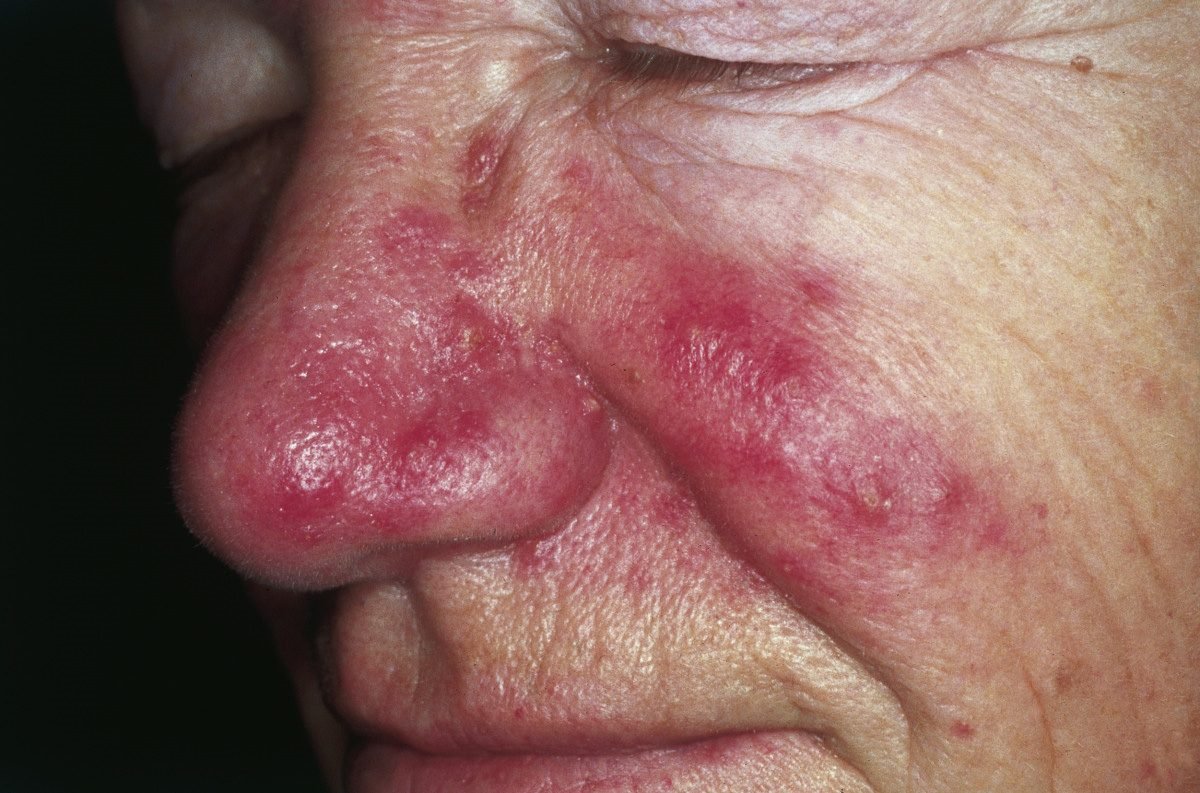
Persistent redness of the central face — cheeks, nose, chin, forehead.
Papules and pustules — acne-like bumps, but without the blackheads and whiteheads of true acne.
Visible small vessels (thread veins), stinging or burning skin, and sometimes gritty, irritated eyes.
Common triggers: sun, heat, alcohol, spicy food, hot drinks, stress, harsh skincare.
Fixed redness and small bumps over the nose and cheeks — rosacea’s home territory. Photo: Sand et al., Wikimedia Commons, CC BY 2.0.
Treatment that works
Prescription options
Topicals — ivermectin cream, metronidazole gel or azelaic acid settle the bumps and inflammation over 6–12 weeks.
Oral treatment — low-dose doxycycline for moderate flares of papules and pustules, used in courses.
Redness-specific gels — brimonidine can temporarily tone down background redness for events.
Persistent thread veins and skin thickening respond to laser/light therapy or specialist care — the doctor can refer where appropriate.
Daily habits that protect your skin
SPF 30–50 every day — sun is the most consistent rosacea trigger there is.
Gentle, fragrance-free cleanser and moisturiser; nothing gritty, alcohol-based or “anti-ageing acid” heavy.
Learn your triggers — a fortnight of noting flares usually identifies them.
Two situations need prompt in-person care: eye symptoms that go beyond mild grittiness — a painful red eye, light sensitivity or blurred vision can mean the cornea is involved and needs same-day assessment; and a sudden fierce facial rash with fever or feeling unwell, which is more likely infection than rosacea.
One treatment to avoid: steroid creams on the face may calm redness for a few days, then rebound and entrench the rosacea (“steroid rosacea”). If you’ve been using one, don’t stop abruptly — tell the doctor, who will plan a proper wean and switch.
How the online consultation works
Book a time above — same-day appointments are usually available, seven days a week.
Show your skin by video — daylight photos of the face from a couple of angles help.
Get your plan — prescription treatment sent electronically to your pharmacy, a skincare routine that won’t aggravate it, and a review point to step things up if needed.
Frequently asked questions
What’s the difference between rosacea and acne?
Rosacea centres on flushing and persistent redness with bumps but no blackheads or whiteheads, typically starting after 30. Acne features comedones and affects a broader age range. They can co-exist — and treatment differs, which is why an assessment matters.
Can rosacea be cured?
It’s a long-term tendency rather than a curable infection — but with the right treatment and trigger control most people get their skin calm and keep it that way, with occasional flares managed early.
How long does treatment take to work?
Topicals typically show real improvement by 6–12 weeks; oral doxycycline courses work faster on angry flares. Judge a treatment at the 3-month mark, not 3 weeks.
Does alcohol cause rosacea?
No — but it’s a common flare trigger, red wine especially. Rosacea is about blood-vessel and skin reactivity; the old “drinker’s nose” stereotype is unfair and wrong.
My eyes feel gritty — is that rosacea too?
It can be: ocular rosacea causes dry, gritty, irritated eyes and lid margins. Mention it in your consultation — it changes treatment. A painful red eye or blurred vision, though, needs same-day in-person care.
Can an online doctor treat rosacea?
Yes — rosacea is diagnosed on story and appearance, which video and photos capture well. A registered Irish doctor can prescribe topical and oral treatment where appropriate and refer on for laser or specialist care when that’s the right next step.
This page is general health information, not a diagnosis. A registered Irish doctor will assess your individual situation during your consultation. In an emergency call 999 or 112.
Aoife isn't a doctor. For emergencies call 999 or 112.
WhatsApp us
🍪
We value your privacy
We use cookies to improve your experience on our site. Essential cookies are required for core functionality. Analytics and marketing cookies help us understand how you use our site and measure ad performance. You can choose which cookies to allow. Learn more
Strictly NecessaryRequired for the website to function. Cannot be disabled.
AnalyticsGoogle Analytics — helps us understand how visitors use the site.
One use per patient, on a booking made in the app. iPhone and Android. Not redeemable on the website.
We use cookies. DoxOnCall uses essential cookies to make the booking flow work, plus analytics and advertising-measurement cookies that help us see which ads bring patients so we can keep booking costs low. You can opt out anytime. See our privacy policy for detail.
Essential cookies
Required for the site, booking, and login to work. Cannot be disabled.
Analytics cookies
Anonymised usage analytics (Google Analytics 4) so we can see which pages help patients most. We do not sell or share this data.
Advertising-measurement cookies
Let us measure which online ads (e.g. Google Ads) lead to bookings, so we can keep our prices and booking costs low. No third-party ads are shown to you on this site.