
Gout & Big Toe Pain: Symptoms, Treatment & When to Worry
Waking at night with a big toe so painful even the bedsheet hurts — hot, swollen, red and impossible to walk on — is the classic picture of a gout flare. Gout is one of the most treatable forms of arthritis: the right medicine, started early, usually settles a flare within days. Below we cover how to recognise gout, what genuinely eases a flare, when daily prevention makes sense, and the one situation where a swollen joint is an emergency. A registered Irish doctor can assess and treat you today by phone or video for €34.99.
Book a gout consultation — pick a time that suits you
Your consultation is preselected. Just choose a slot below, add your details, and a registered Irish doctor will call you.
Select a Service
Consulting with Dr Abdul Rehman
Choose Date & Time
Select a date, then pick an available slot
- 📞 The doctor calls you — no waiting room
- ✅ IMC-registered Irish doctors
- 🕑 All times are Irish time
Your Details
All fields marked * are required
Secure payment next — you won't be charged until you confirm.
Having trouble making payment or securing your slot? 💬 WhatsApp our support team
Booking for yourself?
You've given the patient your own name and date of birth.
You've given the patient your own name, with no date of birth for them.
Review & Pay
Confirm your booking details below
256-bit SSL encryption · Google Pay & card accepted
Refundable if you cancel at least 6 hours before the appointment — see our Terms & Conditions.
What is gout?
Gout happens when uric acid — a normal waste product in the blood — builds up and forms needle-sharp crystals inside a joint. The immune system reacts fiercely, and the result is sudden, intense inflammation. The base of the big toe is the most common target, but gout can also strike the mid-foot, ankle, knee, wrist, fingers or elbow.
Flares often start at night and reach maximum pain within the first 24 hours. Untreated, a first flare typically settles over one to two weeks — but with treatment, most people improve dramatically within a few days.
Is it gout? The typical signs
- Sudden onset — often overnight, reaching peak pain within a day.
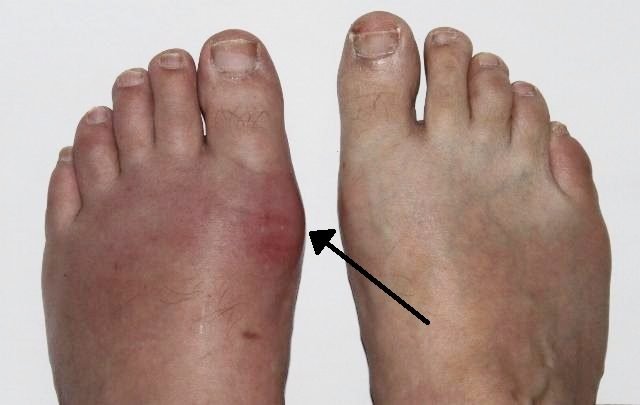
- One joint — most often the base of the big toe.
- Severe tenderness — even light touch or a sock can be unbearable.
- Heat, redness and swelling over the joint; the skin may later peel or flake.
- Previous similar episodes that settled on their own — very typical of gout.
Common triggers include alcohol (especially beer), dehydration, red meat or shellfish-heavy meals, sugary drinks, crash dieting, some blood-pressure tablets (like thiazide diuretics), and even a minor knock to the joint.
Treating a gout flare
The golden rule: start treatment as early as possible — ideally within the first hours of a flare.
Medicines that work
- Anti-inflammatories (NSAIDs) — such as naproxen or ibuprofen at proper doses, if they are safe for you (they are avoided with kidney problems, stomach ulcers and some heart conditions).
- Colchicine — a gout-specific prescription tablet, very effective when started early at modern low doses.
- A short course of steroid tablets — a good option when NSAIDs and colchicine are unsuitable.
After assessing you, a registered Irish doctor can prescribe the option that fits your health history and send the prescription electronically to your chosen pharmacy — often within the hour.
What helps at home
- Rest and elevate the joint; keep the bedsheet off the toe at night.
- Ice wrapped in a towel, up to 20 minutes at a time, several times a day.
- Drink plenty of water; skip alcohol and sugary drinks until it settles.
- Avoid aspirin for pain relief — it can worsen a gout flare.
Stopping gout coming back
One flare may be a warning shot. Repeated flares deserve prevention, because each one risks joint damage and hard uric-acid lumps (tophi) forming over time.
- Daily uric-acid-lowering treatment (usually allopurinol) is recommended when you have two or more flares a year, kidney stones, kidney impairment or tophi. It is started after the flare settles, and stays long-term.
- Lifestyle changes that genuinely help: cutting back beer and spirits, sugary soft drinks, red meat and offal; keeping well hydrated; gradual (not crash) weight loss.
- Medication review — some blood-pressure tablets push uric acid up; alternatives may suit you better. Never stop a prescribed medicine without medical advice.
How the online consultation works
- Book a time above — same-day appointments are usually available, seven days a week.
- Talk to a registered Irish doctor by phone or video. Photos of the joint help; the doctor will also review your other medicines and health conditions.
- Get your treatment plan — self-care advice, a prescription sent electronically to your pharmacy where appropriate, and clear guidance on preventing the next flare.
Frequently asked questions
How do I know it’s gout and not something else?
The pattern is the biggest clue: sudden severe pain in one joint — classically the big toe — peaking within 24 hours, with heat, redness and extreme tenderness. A doctor can usually diagnose gout from your story and an examination over video; only unusual or unclear cases need in-person tests.
Can an online doctor prescribe gout treatment?
Yes, where clinically appropriate. After assessing you, a registered Irish doctor can prescribe anti-inflammatories, colchicine or a short steroid course, sent electronically to your chosen pharmacy.
What settles a gout flare fastest?
Starting effective medicine within the first hours. Alongside it: rest, elevation, ice for up to 20 minutes at a time, plenty of water, and no alcohol until it settles. Avoid aspirin — it can make gout worse.
Do I need daily medication to prevent gout?
If you get two or more flares a year, have kidney problems, kidney stones or tophi, daily uric-acid-lowering treatment such as allopurinol is usually recommended. It is started once the flare has settled and is taken long-term.
Does diet really matter for gout?
It helps — beer, spirits, sugary drinks, red meat, offal and shellfish all push uric acid up, and hydration matters. But when flares keep coming, medication lowers uric acid far more reliably than diet alone.
When is a swollen joint an emergency?
When it comes with fever, shivers or feeling generally unwell — that can mean septic arthritis, an infected joint needing hospital care the same day. A completely unmovable joint, or a hot swollen joint in a child, also needs urgent in-person assessment.
This page is general health information, not a diagnosis. A registered Irish doctor will assess your individual situation during your consultation. In an emergency call 999 or 112.