
Most sore throats are viral. Group A streptococcus does cause some — and identifying which warrants antibiotics matters for both individual and public health.
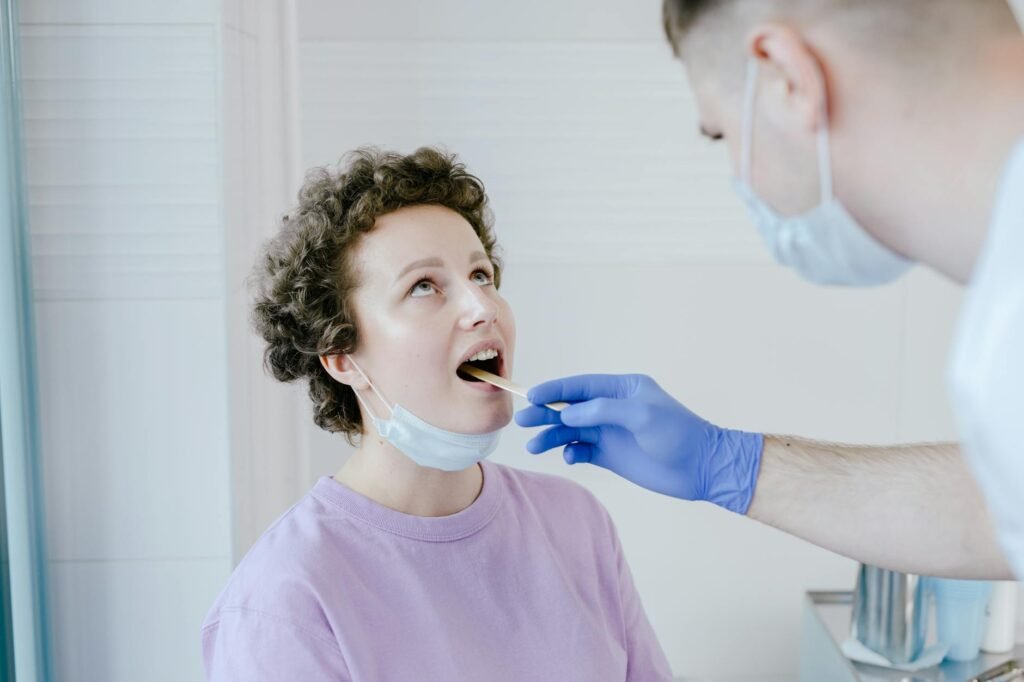
Group A streptococcus (GAS) is a bacterium that causes a range of infections, from common (strep throat, scarlet fever, impetigo) to rare and serious (invasive Strep A — sepsis, necrotising fasciitis). Most exposure to Strep A causes either no illness or mild self-limiting infection. The vast majority of sore throats — even during Strep A outbreaks — are viral and do not need antibiotics.
Strep throat tends to present with:
However, viral infections (adenovirus, EBV "glandular fever", and others) can mimic these features. The distinction is not always obvious clinically.
Per NICE CKS and ICGP guidance:
Scores: 0–2 — likely viral, no antibiotics. 3–4 — higher probability of strep; consider testing or empirical treatment.
Scores: 0–1 — likely viral. 2–3 — rapid testing or delayed prescription. 4–5 — consider immediate antibiotic if symptoms severe.
Rapid antigen tests for Strep A are available; throat swab culture remains the gold standard but takes 24–48 hours. Routine testing for everyone with a sore throat is not necessary — clinical scoring guides who benefits from testing or treatment.
When antibiotics are indicated per NICE:
Strep A infection with characteristic features: sandpaper-like rash, "strawberry tongue", flushed cheeks, sore throat, fever. Mandatory notification to HPSC in Ireland. Antibiotic treatment indicated. Notify your child's school. Per HPSC, scarlet fever activity in Ireland follows seasonal patterns and occasionally outbreaks.
An Online Doctor can assess a sore throat using clinical scoring, advise on whether testing or antibiotics are appropriate, prescribe where indicated, and arrange in-person review for red-flag features. For children or anyone significantly unwell, in-person assessment is usually preferred.
Sources: HSE.ie, HPSC, NICE CKS Sore Throat, ICGP.
Most sore throats are viral — antibiotics will not help.
Clinical scoring helps decide who likely has strep and warrants testing or treatment.
Difficulty swallowing saliva, drooling, neck stiffness, scarlet-fever rash — same-day in-person care.
Same-day video and phone consultations across Ireland.
Book a consultationYour consultation is preselected. Choose a slot, add your details, and a registered Irish doctor will call you.
Consulting with Dr Abdul Rehman
Select a date, then pick an available slot
All fields marked * are required
Secure payment next — you won't be charged until you confirm.
Having trouble making payment or securing your slot? 💬 WhatsApp our support team
Booking for yourself?
You've given the patient your own name and date of birth.
You've given the patient your own name, with no date of birth for them.
Confirm your booking details below
A sick note and a fit-to-work certificate certify opposite things — that you are unfit for work, and that you are fit to return. Each needs its own clinical assessment, so they cannot both be issued from the same consultation. If you need both, please book two separate appointments. Booking this consultation intending to obtain both does not entitle you to a refund.
Read the full terms256-bit SSL encryption · Google Pay & card accepted
Refundable if you cancel at least 6 hours before the appointment — see our Terms & Conditions.
Processing…
Speak to support
Email us
Available
7 days a week · same-day slots
WhatsApp us
We value your privacy
We use cookies to improve your experience on our site. Essential cookies are required for core functionality. Analytics and marketing cookies help us understand how you use our site and measure ad performance. You can choose which cookies to allow. Learn more
Book in the free DoxOnCall app and get 20% off one consultation. Same Irish-registered doctors, same certificates — just cheaper in the app.
One use per patient, on a booking made in the app. iPhone and Android. Not redeemable on the website.
Required for the site, booking, and login to work. Cannot be disabled.
Anonymised usage analytics (Google Analytics 4) so we can see which pages help patients most. We do not sell or share this data.
Let us measure which online ads (e.g. Google Ads) lead to bookings, so we can keep our prices and booking costs low. No third-party ads are shown to you on this site.