
A Complete Guide to Urinary Tract Infections and Recurrent UTIs
Urinary tract infections (UTIs) are one of the most common reasons people seek telemedicine care in Ireland.
They can be painful, uncomfortable, and disruptive to daily life.
This guide explains:
UTI symptoms
Common causes of UTIs
How UTIs are treated in Ireland
What helps with recurrent UTIs
Which over-the-counter (OTC) treatments work
When to seek medical help
What Is a Urinary Tract Infection (UTI)?
A urinary tract infection (UTI) happens when a bacteria enters the urinary system and causes infection.
Our urinary system includes:
Kidneys
Ureters
Bladder
Urethra
Most UTIs affect the bladder and are also called cystitis.
UTIs are much more common in women but can affect anyone.
Common UTI Symptoms
Symptoms of a UTI commonly include:
Burning or stinging when peeing
Needing to pee more often than usual
Urgent need to pee
Cloudy, dark, or strong-smelling urine
Lower tummy pain or pressure
Feeling tired or unwell
Blood in the urine
If you develop fever, chills, nausea, vomiting, or back pain, this may indicate a kidney infection, which is a serious condition and requires urgent medical care.
What Causes UTIs?
Most UTIs are caused by bacteria from the bowel entering the urinary tract.
Common risk factors include:
Being female (shorter urethra)
Sexual activity
Not fully emptying the bladder
Pregnancy
Menopause
Diabetes or weakened immunity
Urinary stones or blockage
UTIs are not caused by poor hygiene.
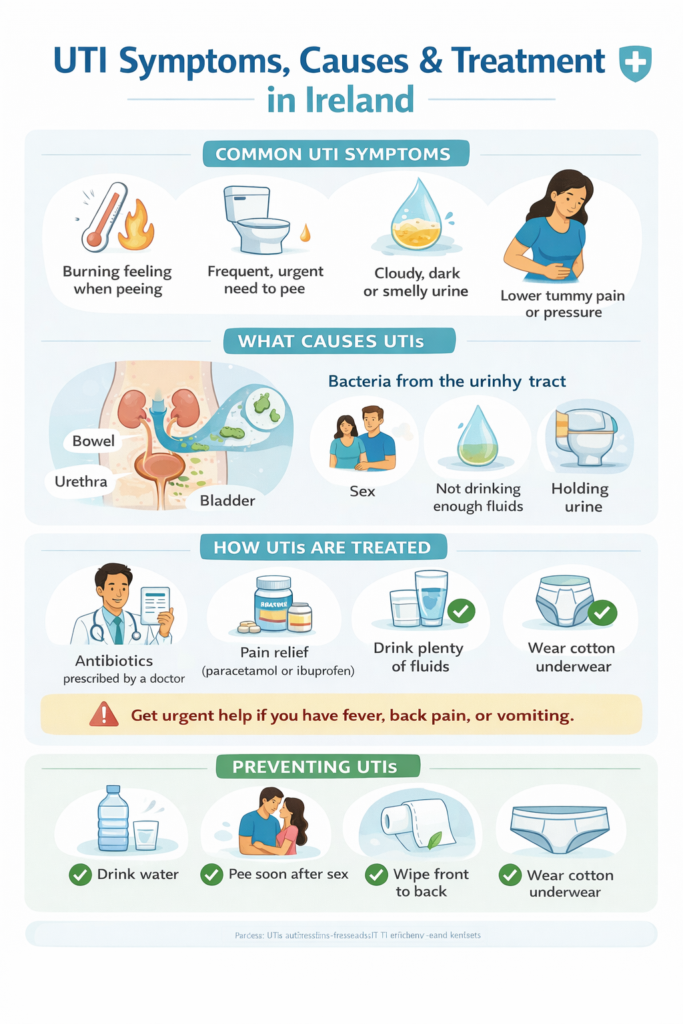
What are Common UTI Treatment Options in Ireland
Antibiotic Treatment for UTIs
Most UTIs require prescription antibiotics.
Your doctor may prescribe:
A short 3-5 day course of antibiotics
A longer course may be needed if symptoms are severe or recurrent
Symptoms usually improve within a few days, but it is essential to finish the full course even if you feel better.
Treatment for Kidney Infection (Pyelonephritis)
A kidney infection is more serious condition and may cause:
High fever or chills
Back, loin, flank or side pain
Nausea or vomiting
This needs urgent in-person medical assessment and sometimes hospital treatment.
What Are Recurrent UTIs?
Recurrent UTIs are defined as:
Two or more UTIs within six months, or
Three or more UTIs within one year
Recurrent UTIs are common and can significantly affect quality of life.
Possible causes include:
Persistent bacteria
Hormonal changes after menopause
Bladder emptying problems
Underlying urinary conditions
Sometimes UTI-like symptoms may have other causes, such as vaginal irritation or sexually transmitted infections, which need in-person physical assessment.
What You Can Do to Help Prevent UTIs
Drink Plenty of Fluids
Aim to drink water regularly throughout the day
This helps flush bacteria from the bladder
Healthy Bladder Habits
Pee when you need to
Avoid holding urine for long periods
Empty your bladder fully
After Sex
Pee soon after sex
This may reduce the chance of bacteria entering the bladder
Hygiene and Clothing
Wipe from front to back
Wear loose cotton underwear
Avoid tight synthetic clothing
Avoid perfumed soaps, sprays, and bubble baths around the genital area
Over-the-Counter (OTC) Treatments for UTIs
Pain Relief
Paracetamol or ibuprofen can help ease pain and discomfort
Cranberry Products
Cranberry juice or supplements do not treat UTIs.
Evidence for prevention is limited, and they should not be used as a substitute for medical treatment.
D-Mannose and Probiotics
Some people use D-mannose or probiotics, but evidence is mixed.
They should not delay seeing a doctor if symptoms persist.
Always check with your doctor before starting any supplements.
When to See a Doctor for a UTI
You should seek medical advice if:
Symptoms last longer than 48–72 hours
Symptoms worsen
You have fever, chills, flank or back pain, or vomiting
You are pregnant
You have recurrent UTIs
You are male with UTI symptoms
UTIs in men and during pregnancy always need medical assessment.
How to Prevent Recurrent UTIs
If you get recurrent UTIs, your doctor may discuss:
Targeted antibiotic strategies
Hormonal treatment (post-menopause)
Further investigation if needed
Management is individual and depends on your symptoms, history and risk factors.
Key Takeaway
UTIs are common, uncomfortable, but usually easy to treat.
Early treatment reduces complications and helps prevent recurrence.
If symptoms keep returning, professional assessment is essential to find the underlying cause and reduce future infection.